Memoirville

INTERVIEW: Kelly McMasters, Welcome to Shirley: A Memoir from an Atomic Town

May 11th, 2008 by Elizabeth Minkel

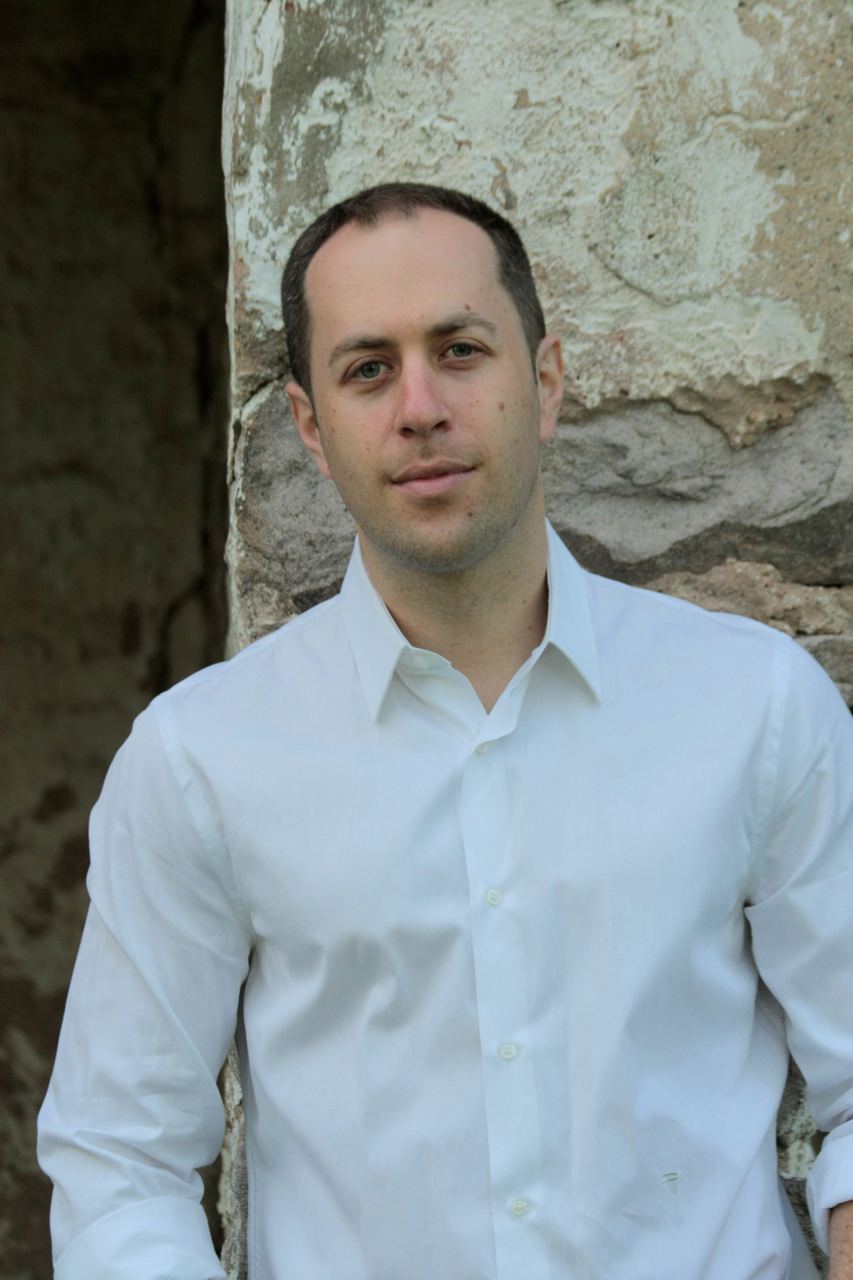
Kelly McMasters’ first memoir, Welcome to Shirley, is more than an account of her childhood—it’s a portrait of the town in kelly.jpgwhich she was raised. Kelly, a journalist and writing professor at Columbia University, traveled back to Shirley, New York, a working class Long Island town that has been repeatedly touched by tragedy. She slowly pieces together Shirley’s long, troubled past—the environmental threats of the nearby nuclear research facility, the high cancer rates and the large number of accidents that devastated her family and her neighborhood, and the town’s struggle to throw off its tarnished image. She does it all through the eyes of her younger self, happy to have a place to call home and, at least at first, ignorant of the troubles growing around her.

We caught up with Kelly between stops on her book tour. She talked with us about the Shirley she remembers and the Shirley that she’s come to know writing and researching the book (read an excerpt here).

-Elizabeth Minkel

In the foreword, you write, “The words were different, but the message the same: Shirley isn’t worthy. I wrote mainly to suggest that it is.” So when and why exactly did you decide to write a memoir about your hometown?

The writing came before the decision. I started a series of essays in grad school that kept circling back to the town and I realized there was something unfinished there, something I was trying to get at, although at the time it was unclear what that something was exactly. I continued to unpack it for a period of time and came to understand that at the center was this knot of shame—shame about where I was from, shame that I loved it, and shame that I was too chicken to admit that it was where I was from. As I spoke to friends who grew up there with me I realized I’d hit upon something and this question—why are we ashamed?—became the banner for the book.

The book is subtitled “A Memoir from an Atomic Town” but it really reads more like a memoir of the town. Why focus on Shirley rather than simply focusing on your life there?

Ultimately, I think the best memoirs are about something larger—a more universal theme, or the writing itself—rather than the writer. I didn’t actually conceive of the project as memoir when I started, and my goal was to use the narrative structure and first person narrator as a vehicle to get into the town. I like to think of my character more as a chronicler rather than the center of the story—I just happened to be there, which gives me particular insight. For me, the main character in the story is the town itself. I was just a way to get in. Read more »

EXCERPT: Welcome to Shirley by Kelly McMasters

May 11th, 2008 by Elizabeth Minkel

On the surface, Kelly McMasters had a perfect shirley.jpgAmerican childhood: A kind family, supportive neighbors, sparklers on the Fourth of July, sledding expeditions in the woods, popsicles made in ice cube trays. But as she grew older, she started to notice that things in Shirley, a working class Long Island town, were not what she’d thought. From the town’s protracted struggle to change its image to the growing presence of the nearby nuclear research facility, Shirley is a troubled place that can’t seem to catch a break. In these excerpts from her memoir Welcome to Shirley, McMasters discusses this growing realization and how she had to learn to reconcile her childhood memories with her adult knowledge. (read an interview here)

From Chapter 4:

When looking at Long Island on a map, I’ve always seen an alligator. I know most people refer to the island as being shaped like a fish—in school I learned that the Native American Indians had in fact named the place Paumanok, or fish-shaped island—but the east end of the 118-mile strip gets muddled in that description. What kind of fish really has a tail that forked so dramatically that it could stand in for the thin slip of Montauk? To me, Long Island looks like an alligator facing away from the continent, his tail curled up along the side of his body. He is yawning out into the Atlantic Ocean, Gardiner’s Island dancing like a shrimp above his elongated lower jaw, mouth about to snap shut on its prey. Shirley is located at the spot where the upper and lower jawbones connect, just beneath his chin.

As the weeks turned into months, and we became more entrenched in our new home, I became more and more fascinated by Long Island. Since my father was at the golf course most days, my parents bought a second car—Jerry’s brother’s scrappy green Concord—so my mother could run errands without relying on her husband’s erratic schedule. My mother took me on short drives, and I was soon able to distinguish routes and roads, and where we were on different road maps. I would trace the branching highway lines along the middle of the island, calculating the miles between our town and New York City, which felt as far away as, say, Kentucky, or even London. Read more »

EXCERPT: Rockabye by Rebecca Woolf

April 28th, 2008 by Rebecca Woolf

“It seems impossible for me to be pregnant now. All of the years of drunken sex with strangers, forgotten birth-control pills, weekend trips blurred from substance abuse, my year of so-called nymphomania. My name is Rebecca and I’m a sex addict. But I wasn’t a sex addict. I was just lonely.”

Chapter 1. Holy Shit, I’m Pregnant

I must be drunk or on drugs or dreaming. My breasts arerockabye_web.jpg not sore and the nausea I’ve been feeling is just a weeklong hangover. I had a lot to drink last week at the Three of Clubs. Five rounds or so. There is no way I can be pregnant.

I light up a cigarette and lean out the window of my bedroom. My hands are shaking. My tattoos itch. They always itch when I’m nervous, rising up from my skin like swollen bug bites. “I’m not pregnant,” I say aloud. My roommate knocks on my bedroom door. “Are you talking to me?” Read more »

G-CHAT: Rebecca Woolf, Author of Rockabye

April 26th, 2008 by Lori Leibovich

Blogger Rebecca Woolf’s new memoir, ROCKABYE: From Wild to Child (Seal Press) (read an excerpt) is about finding herself unexpectedly pregnant at 23 and her journey to become a mother and wife without losing herself in the process. Rebecca and I G-chatted about sex, baby weight, and the blogosphere while I was in a Brooklyn café on a rare break from my own work and two children and she was in San Francisco (on a rare break from her one child and book tour). —Lori Leibovich

woolfrebecca_web.jpg

me: Rebecca? Lori here. For the SMITH interview.

rebeccawoolf: hey!

me: Hi! So before we start, a confession: I scribbled all my questions in the back of your book and of course, as I scrambled out of the house to do this interview at the café down the street, I forgot it at home. and I can’t go back to get it because my kids are there and will never let me leave! So I’ll be winging it a bit. Read more »

Dogs. Diapers. Brisket. A Passover Story

April 21st, 2008 by Larry Smith

Anyone who just enjoyed, or possibly survived, their family’s Passover Seder this past weekend can relate to SMITH member Mia’s essay in My Life So Far. Her story, Family Time, is ostensibly about coming home for the holidays and discovering that her sister’s bulldog is wearing a diaper (and who hasn’t been there?), but really about everything else that happens when grownups come home: regression, love, madness, brisket. Mia writes: “Now, having spent the first 30 minutes of our visit to my parents’ house trying to devise a way to keep the black cotton shorts—which were holding up the dog’s underwear, which contained a maxi-pad—Pampers didn’t seem like such a crazy idea after all.” If you only read one Passover story this week…

What’s your story? Whether your memoir-in-progress or a personal essay under 1500 words, tell your true tale in SMITH’s My Life So Far story project.

INTERVIEW: Lily Koppel, Author of The Red Leather Diary

April 14th, 2008 by Whitney Joiner

lily2.jpgFour years ago, Lily Koppel, a young reporter for the New York TimesMetro desk, walked out of her Upper West Side apartment building to find a Dumpster on the curb. The Dumpster overflowed with at least fifty old steamer trunks—detritus from the building’s basement, waiting to be carted away by city workers. The promise of found treasure was irresistible, and Koppel climbed inside. Among the clothes and shoes and photographs, she found the key to her first book, The Red Leather Diary: Reclaiming a Life Through the Pages of a Lost Journal.

Nestled inside one of the trunks was a crumbling diary. Koppel opened it and entered the world of a Manhattan teenage girl. For five years, from her 14th birthday in 1929 until 1934, Florence Wolfson diligently recorded her life: her fierce desire to become a writer and artist; her seemingly endless fascination with New York, art, music and ideas; her quest for love and understanding from both women and men.

Three years after Koppel found Florence Wolfson’s diary, she found Wolfson herself, now a 90-year-old grandmother. Koppel returned the diary, sparking an intense friendship, a New York Times City section piece, and now, a gorgeous book, The Red Leather Diary. Alongside Wolfson’s short entries—amazing artifacts from a lost New York by themselves; Wolfson is a complex and fascinatingly independent and ambitious woman—Koppel recreates Wolfson’s life as a young woman in search of herself. (Read an excerpt here.)
—Whitney Joiner

The book is such an incredible account of everyday life in upper class 1930’s New York, but what’s more incredible is Florence: her intellectual curiosity, artistic pursuits and desire to break the rules. Her entries beautifully capture that adolescent and post-adolescent feeling of knowing you’re so full of promise—the layered experience of knowing you’re capable of creating something wonderful, immediately followed by a slight anxiety and regret that you haven’t yet. And at the time that you found the diary, you were grappling with the same kind of thing as a young New York Times reporter.
Yes. Just to stumble into a dumpster full of old steamer trunks and to climb in and feel like you’re entering into this woman’s life, this message in a bottle – it would’ve been fascinating to me no matter what, just because I love that kind of thing. But then to have the content completely relate to your own life as a young writer living in New York, someone who has ambitions to create something lasting and of beauty. It was spooky, even, and miraculous in its own way. I’m still sometimes flabbergasted by it: How did I end up with this?

What was your emotional reaction when you first read her diary?
It was almost like I was in love with her, in a platonic way. I thought, this is an absolutely amazing woman. The nature of writing in a diary is that you really feel like you are, almost, that person. You enter into their most personal emotions.

Florence has an entry: “Went to the Museum of Modern Art and almost passed out from sheer jealousy—I can’t even paint an apple yet—it’s heartbreaking!” That was something I could relate to—being overwhelmed by art and inspired to create something of your own.

From the beginning I really thought of the diary as a work of art, something that deserved not to be hidden, but revealed to the world.

You found the steamer trunks, wrote the first Times piece, and then put the diary aside for three years?
I read it the night that I got it, but I didn’t really put it aside. It was this magical thing that I’d found, and I felt like it was my little piece of an older New York, one that we all romanticize when we move to this city, with this Holly Golightly element.

I never lost enthusiasm for it; I just didn’t know how to go about finding Florence. I’d done Nexis searches and made several calls, but it never went anywhere. A few years later—I had this beat where I covered the old characters of New York—I received this chance call from a private investigator, also a lover of old New York, and we ended up meeting at a steakhouse. I showed him the diary, and he was just as intrigued with Florence. He ended up finding her.

What was the process of turning the article into a book?
When I first found her, I was just planning on returning the diary to her. But she was so excited when I first called her. One of the first things she said was, “You know, I was a writer, too.” We both kind of came up with the idea that it would be a great article. After it ran, I had so much material: this three-ring-binder of information. And I had Florence herself, and she had shoeboxes of photos and is so eloquent – it wasn’t hard to think that this would be a great book.

The diary itself won’t last forever; it’s a bit like an hourglass, and the sand is disappearing. Every time you open the diary, a little piece crumbles off.

The bulk of the book is the diary itself—entries that are then followed by your reportage. Why did you choose that method, rather than stringing them together in some kind of cohesive narrative?
I was very intrigued by the whole notion of what a diary is. It’s very much in the spirit of SMITH Magazine: everybody has a story to tell. I wanted that spirit to be conveyed through the writing of the book, to start with me finding this object, and being drawn into Florence’s world.

You meet Florence as this lovely young woman and she grows more and more complex. I tried to tell the story behind the entries, but to really allow her own voice to give meaning to her life and her story.

Your reportage is full of minute detail: someone arches an eyebrow or shifts in their seat. How did you recreate these stories?
Florence and I talked in-depth about her life: Florence picked out entries that she thought were significant and we’d talk about them. All last summer I went to her home in Westport, where she lives in the summer, and usually had my tape recorder on for some of the afternoon. We’d talk for about 5 hours or so. At the beginning she’d say, “How do you expect me to remember this?” But it was just like warming up —with the entries, a tremendous amount came back to her. I also got in touch with all of the surviving family members of friends of hers—none of her friends were still living.

One of the other similarities between me and Florence is that we’re both writes and painters, and I think we have a real visual sensibility. Images and color are very important to me. Unless I can see it, I almost can’t write it. We relied on photos. I’d say, “What exactly did your childhood bedroom look like?” And she’d say, “You can’t expect me to remember that!” I’d say, “Well, was the bedspread a certain color?” Then I’d find a photo of her bedroom.

As teenagers we grapple with these conflicting and equally strong impulses, both to connect, to be accepted, and to express ourselves. Florence had no qualms about that—she wore riding clothes to school, had relationships with women, wandered around New York on her own. So it’s a bit shocking to the reader when we realize that she ends up with a more conventional life than she had as a teenager. When you found her, were you disappointed that she didn’t turn out to be an influential writer or artist?
Not really, although I thought that I was going to meet an artist: I had this scenario in my mind of going to some woman’s studio on the Upper West Side. And Florence did have a career as a writer in the 1940s, writing these feminist-tinged articles.

I think she harbors regrets about her life. She’s said, How did I end up living this ordinary life? It’s something she’s repeated throughout our time knowing each other. But in the end, I felt that the diary was a real work of art and a testament to her power as a writer. Just the very feeling of wanting to create something—it was depicted so beautifully in her diary that, in a way, that becomes her lasting work.

It’s not that she totally gave up on her younger self: I think that part of her is still there and has been reawakened by being reunited with her diary. But I think the atmosphere at the time—it was just very difficult to resist getting married and living the life that her parents expected of her with every cell of their bodies, why they had come to America and worked so hard.

Florence is having a renaissance, almost: she’s coming to New York in April, and we’re speaking at the National Arts Club and the library, and they’re doing a panel at Hunter, and she’s so excited. That sentiment—How did I end up leading such an ordinary life?—is going to be overturned somewhat. It’s a really redemptive story in a way. Here’s this young woman, recording her life from 1929 to 1934, and she has no idea that someone’s going to come along 75 years later and see her for who she is and who she wanted to become.

EXCERPT: Red Leather Diary by Lily Koppel

April 14th, 2008 by Lily Koppel

final-red-leather-diary-cover.JPGPainted—played piano—read Baudelaire—and saw Manny. But I couldn’t resist thinking about that girl—! Invited that girl—Pearl is her name—to tea next Thursday afternoon—I hope I’m not disappointed—with her voice, I shouldn’t be.

According to plan, Florence and Pearl Siegelstein met, one late afternoon in March 1932, at an English tearoom on Lexington Avenue, advertised as “a rendezvous for Hunterites.” Italian mosaic tiles fanned out over the floor. Red leather banquettes promised privacy, cordoned off by frosted glass beneath art nouveau chandeliers. It was Prohibition. Even the most innocent teashop had an air of mystery. A violinist played Haydn. Florence had first been invited to the genteel tearoom by her mathematics professor from last year, also a lover of classical music. Attractive, lonely Dr. Marguerite D. Darkow, much admired by her students, had noticed her young pupil, so worldly and wise for her sixteen years. Visited a former teacher of mine, Dr. Darkow, and was amazed by her pessimism and dependence. She is brilliant.

Florence began visiting Dr. Darkow at her teacher’s small Yorkville apartment, where they drank more tea, smoked cigarettes, and listened to the phonograph play sonatas, partitas, and fugues. Dr. Darkow told about her years at Bryn Mawr and graduate studies at the University of Chicago. Florence revealed how she longed to travel abroad. Dr. Darkow pointed out that Europe was ripping apart at the seams. To Dr. Darkow tonight and talked hours on the economic condition of the world—she expects general massacre within 5 years—it is possible. Florence also became friends with her young German instructor, Fraulein Hildegarde Kolbe.
Tea with a beautiful and gracious lady and decided to become sweet and charming—It’s an easy way to embarrass people. Miss Kolbe had come to the States after the war to go to Smith, where Florence had wanted to transfer, but the Wolfsons vetoed her plans to attend the social work program because it began in the summer. “The summer is when you go to the mountains to meet men,” said Mother.

A more gratifying time than I have experienced in a long while—Pearl fascinates me! We sipped delicious coffee and exquisite apricot brandy.

Now, Florence shared a booth with Pearl, whose auburn hair was pinned back from her rather pretty face. Pearl looked intently at Florence over her china cup, stirring in a few sugar cubes. She managed to combine feminine charm with strength of character and good nature. Florence was sixteen. Pearl was nineteen, a senior. Both young women wrote for Echo, Hunter’s literary magazine. Pearl was a playwright with three original plays under her belt and had been one of ten elected to the honorary English society. Her last name, Siegelstein, meant “one who pushes rocks.” Florence thought it an apt description for this intelligent brunette with heart-of-stone determination. Her first name was also fitting. Pearl usually had le mot juste.

Pearl’s parents, immigrants from Eastern Europe, were descended
from stonemasons in the Carpathian Mountains. Pearl had grown up in Harlem, and Florence’s brownstone memories resonated with her. She had also attended Wadleigh, although the two hadn’t known each other there. Her family’s relocation to the Bronx was a source of great distress. Pearl felt as if she had been banished to Siberia. Her family thought that her father, a truck mechanic, was crazy to let her go to college. She could have been working, contributing something to the family pot. After all, it was the Depression. But her father said that if Pearl wanted to go to college, she should go. Pearl was tremendously likable, and Florence was strongly attracted to her.

Was rather cold to Pearl in class today and feel like a little beast—I’ll ask her to lunch on Thursday—I could almost love her!

Arm-in-arm, the young women walked New York, experiencing the city through each other’s eyes, talking over ideas for plays. Florence had just finished reading The Monk and the Dancer by Arthur C. Smith, and was looking forward to his second short story collection, The Turquoise Cup. They passed the usual corner scene of down-and-out former Wall Street brokers selling apples and pencils from cardboard boxes. Florence was used to looking away as she tossed in a coin, but Pearl opened her eyes. They were just trying to feed their families. She insisted Florence look at them.

Out with Pearl tonight and accidentally came upon a life that was real and beautiful and made me feel loathsome—a blind pianist who is happy—in a small cheap restaurant.

They spent hours in Central Park. They admired Cleopatra’s Needle with its twin in London and a similar obelisk at the Place de la Concorde in Paris, uniting them in their love of antiquity and European culture. They lingered at the Shakespeare Garden, planted only with flowers that appeared in the Bard’s sonnets and plays. They passed the Hooverville of shacks in the old emptied reservoir north of Belvedere Castle. Slim lines of smoke rose from the fragile makeshift structures and tents.

Pearl now completely dominates my mind—Once I hop over my stone wall, I’m lost—but something about her gets me!

On a park bench, Florence and Pearl discovered they shared a love of Alice in Wonderland, reciting in unison, “Jam to-morrow and jam yesterday—but never jam to-day,” and John Webster’s poem “Nets to Catch the Wind”: “Vain the ambition of kings who seek by trophies and dead things to leave a living name behind, and weave but nets to catch the wind.” They didn’t leave the park until the lamps glowed in orange-pink orbs at twilight. Not long ago these were gas lamps lit by hand. Much had changed since their parents arrived in America. The flappers had shed corsets and the stiff old Victorian designs for free-flowing materials, altering the
way they moved through the world. Zippers had replaced troublesome buttons and hooks and eyes. Everything was speeding up. Old rules were there to be broken. The Depression wasn’t going to stop them. They were going forward. The hell with men.

Buy the book here. Read an interview with Lily Koppel here.

INTERVIEW: Jennifer 8. Lee, The Fortune Cookie Chronicles

March 17th, 2008 by Elaine Chen

New York Times reporter Jennifer 8. Lee started tracking down a suspiciously high number of lottery winners, and ended up following a trail that led through hundreds of Chinese restaurants on six different continents. The book that resulted from this epic journey (read an excerpt here) ended up being about a lot more than fortune cookies, although you certainly learn some surprising things about them. (They brought luck to 110 Powerball winners, and they actually originated in Japan!) Instead, The Fortune Cookie Chronicles is ultimately about how Chinese food and Chinese immigrants have spread throughout the world, encountering failure and success, then ultimately emerging as something new—but still at its core Chinese. jennyninaportrait.jpg

The same could also be said of Jenny herself, who grew up in a Taiwanese immigrant family on the Upper West Side of Manhattan–not far from the “Szechuan Alley” of Chinese restaurants known as Broadway. After graduating from Harvard, she studied at Beijing University and finally became immersed in “real Chinese food” as well as the real China. She was surprised to find that when she told her classmates she was American, they would reply, “No, you’re Chinese. You were just born in America.” But as she discovered while writing this book, they were probably right.

When we spoke with Jenny, she was cooking and eating a late supper of fish balls. We couldn’t have imagined a better time to talk.
-Elaine Chen

In your book, you spend a lot of time eating in Chinese restaurants, but of course when you were growing up, you probably mostly ate at home. What was your favorite dish that your mother cooked?
I really liked beef noodle soup. That’s a very Taiwanese dish. The funny thing is, I didn’t even really like my mom’s food growing up. So she did learn to cook one dish for me, which was beef with broccoli—and only now do I know that there’s no beef with broccoli in China! But when you’re 12, that’s what you like.

I know first-hand that growing up in America eating Chinese food every night can make you feel different from everyone else. Did you ever ask your mother to cook Western food so you could try to fit in?
You know, I never asked her, but she did. She tried to make spaghetti sauce. It was interesting because now that I’m grown up, I realize that the whole thing about spaghetti sauce is simmering it forever and ever and ever, which is not a really Chinese style to cook. So she would end up basically stir-frying tomatoes, and then it didn’t look anything like what came out of the Ragu jar—we were very perplexed.

And then we went through a hot dog stage; we went through a macaroni stage; we had this dish that we liked, which was basically taking (Campbell’s) Chunky soup and putting it over a bowl of macaroni. . . and (my mother) would even do hamburgers in a strange Chinese way. For a while there were experiments with turkey for Thanksgiving, until we found out that no matter what you do, it doesn’t taste good. So we eat Korean for Thanksgiving now.
Read more »

EXCERPT: The Fortune Cookie Chronicles by Jennifer 8. Lee

March 17th, 2008 by Rachel

New York Times reporter Jennifer 8. Lee started tracking down a suspiciously high number of lottery winners, and ended up following a trail that led through hundreds of Chinese restaurants on six different continents. The Fortune Cookie Chronicles, the book that resulted from this epic journey, ended up being about a lot more than fortune cookies, although you certainly learn some surprising things about them. Read an interview with Lee here. Watch one on Colbert below:

CHAPTER 1: American-Born Chinese

There are some forty thousand Chinese restaurants in the United States—more than the number of McDonald’s, Burger Kings, and KFCs combined.
fortunecookie.jpg
Tucked into exurban strip malls, urban ghettos, and tiny midwestern towns that are afterthoughts for cartographers, Chinese restaurants have spread nearly everywhere across America—from Abbeville, Louisiana, to Zion, Illinois, to Navajo reservations, where, in a distinction shared with only a handful of businesses, they’re exempted from tribe-member ownership. Old restaurants, clothing stores on Main Streets, and empty storefronts have been reborn as Chinese restaurants. The Washington, D.C., boardinghouse where John Wilkes Booth and his accomplices planned Abraham Lincoln’s assassination is now a Chinese restaurant called Wok n Roll.

Chinese restaurants have long been a weekly or monthly ritual for many Americans.

As far back as 1942, chop suey and chow mein were added to the U.S. Army cookbook. Jonas Salk, while developing the polio vaccine in the early 1950s, would eat his lunch at Bamboo Garden on Forbes Avenue, near the University of Pittsburgh, nearly every day. He always ordered the same thing: a bowl of wonton soup, an egg roll, rice, and chicken chow mein made with homegrown bean sprouts—all for $1.35.

Chinese restaurants are sought out for special events, too. In 1961, before the Freedom Riders left for the first fateful bus ride through the Deep South to protest segregation, a number of that company met for dinner at a Chinese restaurant in Washington. “Someone referred to this meal as the Last Supper,” said John Lewis, then a young theology student from rural Georgia, later a congressman. In October 1962, emissaries for John F. Kennedy and Nikita Khrushchev met secretly at Yenching Palace in the Cleveland Park neighborhood of Washington to work out a solution to the Cuban missile crisis. Chinese restaurants were neutral territory.
Read more »

Jason Thompson’s Stella: A Memoir to Lulu

March 16th, 2008 by Larry Smith

display_thumbnailphp.jpegSMITH readers who first got a taste of Jason Thompson’s work via his then-memoir in progress, Stella: A Memoir, will be pleased to learn that the work will now be published as a full-length book on Lulu, the online, publisher on demand. Stella is an original, intense, and at times darkly funny memoir about Thompson’s mother’s insanity and his own battle with depression, a story that will stick to the gut for anyone who has lived with a difficult parent or dealt with mental illness. Read more »